
 English
  日本語
日本語  Français
  русский
  Português
  Español
  عربى
عربى 
The short answer: clean the surface, cut the sponge precisely, seal every gap, and layer materials where needed. Most sound insulation sponge underperforms not because of the material itself, but because of poor installation — gaps, loose edges, and wrong placement can reduce acoustic effectiveness by up to 50%. Follow the steps and principles below to get the maximum noise reduction your sponge is rated for.
Understand What Sound Insulation Sponge Can and Cannot Do
Before installation, it's essential to set the right expectations. Sound insulation sponge works primarily through absorption — it converts sound wave energy into heat by trapping air within its open-cell or closed-cell foam structure. It reduces echo, reverberation, and mid-to-high frequency noise effectively.
However, sponge foam alone does not block low-frequency sound or impact noise (such as bass, footsteps, or machinery vibration). For those, you need mass-loaded vinyl (MLV), dense barrier layers, or decoupling systems used in combination with the sponge.
- Effective against: speech, mid/high-frequency airborne noise, room echo, HVAC hum
- Limited against: bass frequencies below 200Hz, structural impact noise, airborne sound through rigid walls without additional mass
Step 1 — Plan Your Coverage Area Before Cutting Anything
Measure the total surface area you intend to cover and sketch a layout plan. This prevents material waste and ensures you account for corners, edges, and obstacles like switches or vents.
- For wall panels: aim to cover at least 25–30% of the total wall surface area for noticeable acoustic improvement in a room. Covering 50–70% delivers professional-grade results.
- For automotive or mechanical enclosures: cover all flat metal panels continuously, with no exposed sections larger than 10cm × 10cm.
- Prioritize first reflection points in recording rooms — the wall sections directly to the left, right, and above the listening position.
Mark your cut lines on the sponge with a marker or tape before cutting. Measure twice — sponge is difficult to reattach cleanly once adhesive is applied.
Step 2 — Prepare and Clean the Surface Thoroughly
Surface preparation is the single most overlooked step. Adhesive failure is the most common cause of sponge panels falling off walls — and a detached panel creates a gap that completely breaks acoustic continuity.
- Remove all dust, grease, and loose paint from the surface using a dry cloth followed by isopropyl alcohol (70% or higher).
- Allow the surface to dry completely — at least 15–20 minutes after cleaning before applying any adhesive.
- For painted drywall, lightly sand glossy surfaces with 120-grit sandpaper to improve adhesive bonding.
- For automotive metal panels, degrease with acetone or panel wipe solution to remove factory oils.
Surface temperature also matters. Most contact adhesives and foam tapes perform best between 15°C and 30°C (59°F–86°F). Avoid installing in cold or humid conditions — adhesive bond strength can drop by 40% below 10°C.
Step 3 — Cut the Sponge Cleanly and Accurately
A clean cut ensures tight panel-to-panel joints with no gaps. Ragged or compressed edges leave air channels that allow sound to bypass the material entirely.
- Electric carving knife or serrated bread knife: Best for straight cuts on acoustic foam panels. Use long, smooth strokes without pressing down.
- Box cutter / utility knife: Suitable for thin sponge sheets (under 20mm). Use a metal straightedge as a guide and cut in a single firm stroke.
- Hot wire cutter: Ideal for shaped or contoured cuts, particularly on melamine foam or polyurethane blocks.
Never use scissors on thick foam — they compress the material and create uneven, angled edges that prevent flush installation.
Step 4 — Choose the Right Adhesive for Your Application
Not all adhesives work equally well on porous foam surfaces. Using the wrong type leads to either bond failure or material damage.
| Adhesive Type | Best For | Notes |
|---|---|---|
| Spray contact adhesive | Large wall panels, studio rooms | Strong, permanent bond; difficult to reposition |
| Double-sided foam tape | Lightweight panels, temporary installs | Easy removal; lower holding strength over time |
| Construction adhesive (e.g., Liquid Nails) | Dense, heavy sponge sheets on drywall | Very strong; use sparingly to avoid soaking foam |
| Self-adhesive backing (pre-applied) | Automotive panels, pipework | Convenient; verify temperature rating for engine bays |
| Impaling clips / Z-clips | Heavy panels, removable installs | No adhesive needed; ideal for rentals or studios |
Avoid solvent-based glues (like standard super glue or certain epoxies) on open-cell polyurethane foam — they dissolve the cell structure and cause the material to collapse, destroying its acoustic properties.
Step 5 — Apply and Press Firmly, Eliminating All Air Pockets
Once adhesive is applied, placement technique determines long-term bond quality.
- Apply adhesive to both the sponge backing and the wall surface when using contact spray — allow each side to become tacky (typically 60–90 seconds) before joining.
- Position the panel carefully before making contact — contact adhesive bonds immediately on touch and offers little repositioning window.
- Press firmly from the center outward using a flat board or roller to eliminate air pockets underneath the panel.
- Hold each panel under firm pressure for at least 30–60 seconds, then allow full cure time (typically 24 hours) before stress-testing the bond.
Step 6 — Seal Gaps and Edges — This Step Is Critical
Even a 1cm gap between panels can allow significant sound leakage, especially at mid and high frequencies. Sound travels through the path of least resistance — and any unsealed edge becomes that path.
- Butt panels tightly together with no visible gap. If edges don't meet flush, trim with a knife before adhering.
- Use acoustic sealant (acoustical caulk) along wall-to-floor and wall-to-ceiling joints where sponge panels meet hard surfaces.
- For automotive installations, use butyl rubber tape to seal any gaps around panel edges, particularly near door seams and firewall openings.
- Around electrical outlets, switches, or pipe penetrations, cut sponge to fit precisely and apply sealant around the perimeter.
Installation Tips by Application Type
Home Studio or Recording Room
- Place thicker panels (50–100mm) in corners to absorb bass build-up — corner bass traps are among the highest-impact installations you can make.
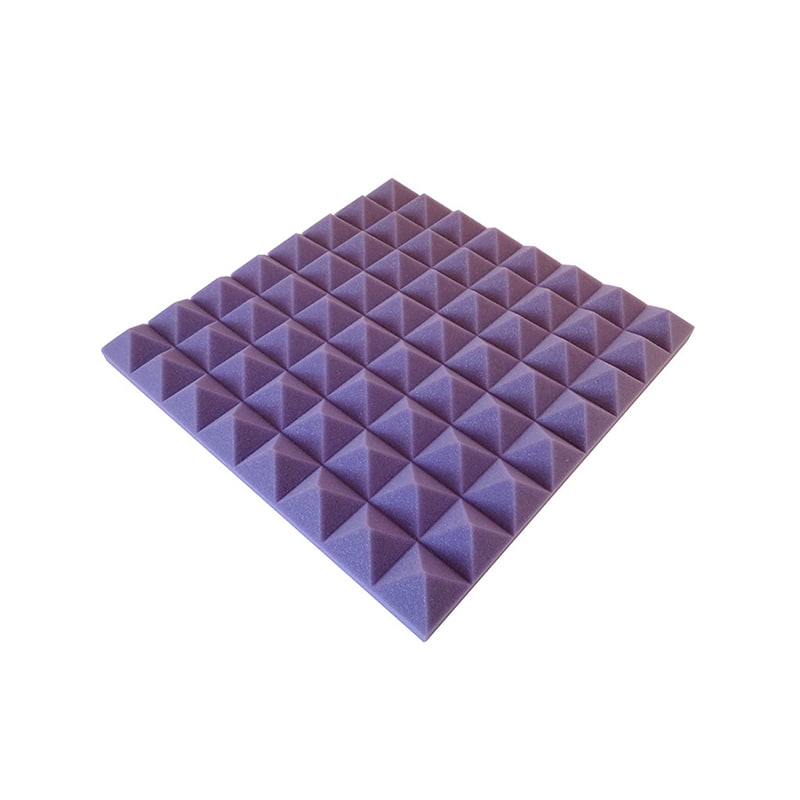
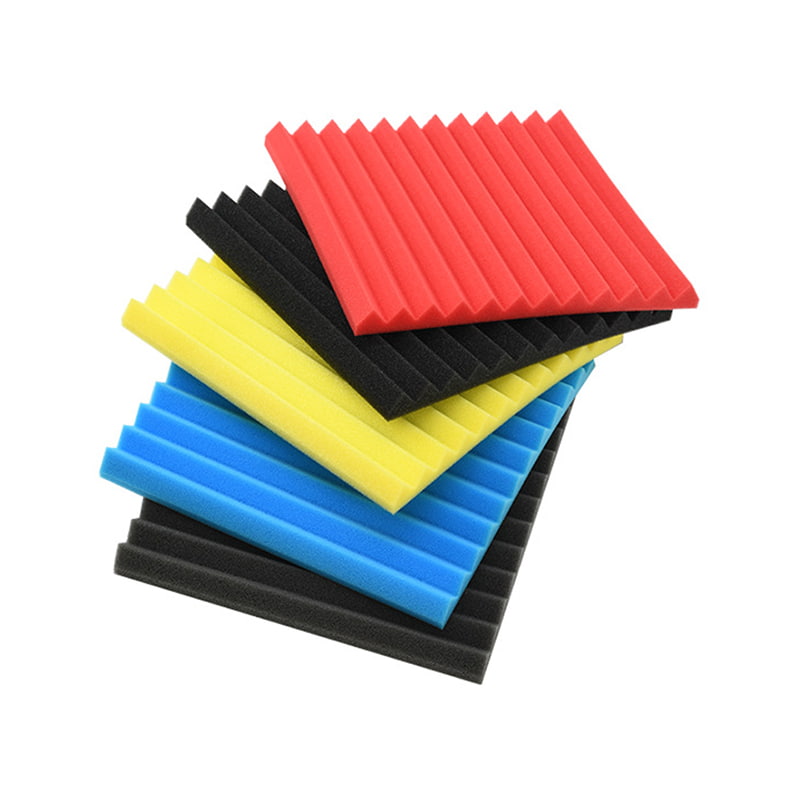
- Use wedge or pyramid-profile foam on walls for diffusion combined with absorption.
- Leave a 50–100mm air gap between the back of the foam panel and the wall — this significantly improves low-frequency absorption performance.
Automotive (Car Doors, Boot, Firewall)
- Apply closed-cell foam (self-adhesive, 6–10mm thick) directly to metal door skins after applying a layer of butyl damping mat first.
- Use heat-resistant foam (rated to at least 120°C) near the engine firewall.
- Cover the full inner door panel surface — partial coverage on metal panels delivers minimal noise reduction.
Pipe and HVAC Duct Lagging
- Use flexible foam pipe lagging that wraps continuously around the full circumference with no exposed metal.
- Secure with foil tape at all seams — standard duct tape degrades over time and loses adhesion in humid environments.
- For ductwork, a 25mm foam lining can reduce airborne HVAC noise by 6–10 dB over a 1-metre run.
Common Installation Mistakes That Kill Performance
| Mistake | Why It Hurts Performance | Correct Approach |
|---|---|---|
| Leaving gaps between panels | Sound bypasses foam through air channels | Butt panels flush; seal edges with caulk |
| Compressing foam during install | Reduces air cell volume, cutting absorption | Apply even, gentle pressure only |
| Skipping surface cleaning | Adhesive fails; panels detach creating gaps | Clean with IPA before any adhesive application |
| Covering only one wall | Sound reflects off untreated surfaces | Distribute panels across multiple surfaces |
| Using too-thin foam for low frequencies | Thin foam only absorbs high frequencies | Use 50mm+ for broadband; 100mm for bass corners |
Quick Installation Checklist
- Surface cleaned with isopropyl alcohol and fully dry before adhesive application
- Sponge cut cleanly with no ragged or compressed edges
- Correct adhesive type selected for the surface material and panel weight
- Panels pressed firmly with no air pockets behind them
- All panel-to-panel joints are flush and gap-free
- Edges and penetrations sealed with acoustic caulk or butyl tape
- Coverage area meets minimum 25–30% of total surface for room treatment
- Corners treated with thicker panels or bass traps where applicable
- Full adhesive cure time observed before testing or loading panels