
 English
  日本語
日本語  Français
  русский
  Português
  Español
  عربى
عربى 
The wrong car wash sponge is one of the most common causes of fine scratches and swirl marks on automotive paint. Most drivers assume any sponge will do the job — but material, pore structure, shape, and washing technique all determine whether you're safely lifting dirt off the surface or grinding it in. The short answer: a large-pore foam sponge or natural sea sponge used with a two-bucket method causes significantly less paint damage than a flat cellulose sponge used from a single bucket. This guide breaks down every major sponge type, what the differences actually mean for your paint, and how to match the right product to your car and washing routine.
Why Your Choice of Car Wash Sponge Matters More Than You Think
Swirl marks and micro-scratches are the number-one paint complaint among car owners who wash their own vehicles. Under a paint depth gauge or inspection light, these marks appear as fine circular scratches across the clear coat — and the vast majority are inflicted not by road debris, but by the washing process itself. Studies by automotive detailing research groups estimate that improper washing causes up to 85% of visible paint defects on vehicles under five years old.
The mechanism is straightforward: a sponge with small, closed pores or a flat contact surface traps grit and sand particles against the paint face. As you wipe, those particles act like fine sandpaper. A sponge with large, open pores absorbs and encapsulates particles away from the paint surface, reducing contact friction dramatically. This is why sponge selection — not just washing pressure — is the critical variable.
The Main Types of Car Wash Sponges: Materials Compared
There are four primary material categories used in car wash sponges. Each has a distinct pore structure, water-holding capacity, and risk profile for paint surfaces.
Natural Sea Sponge
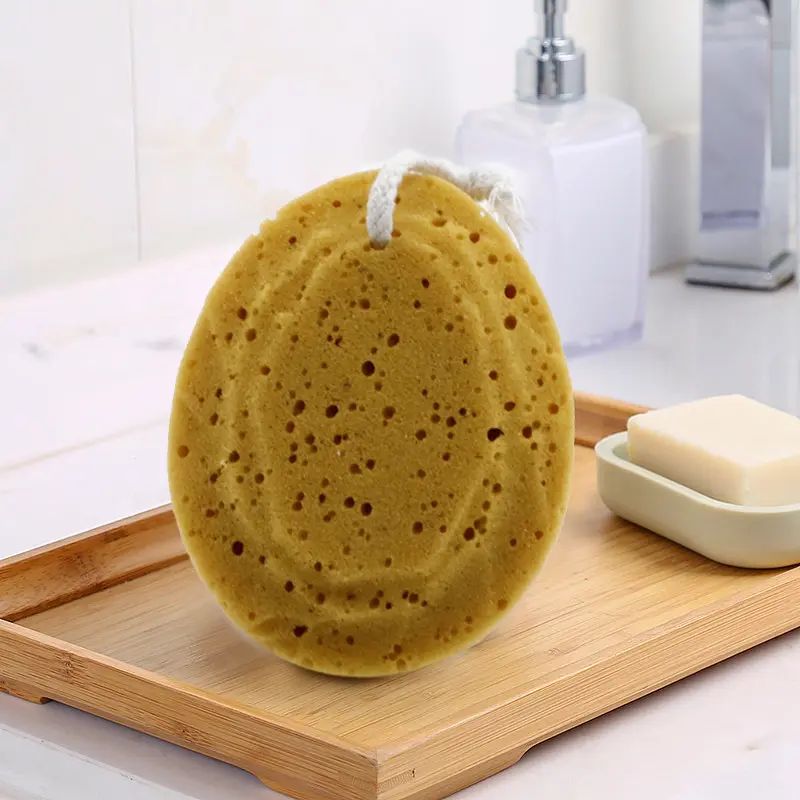
Natural sea sponges are harvested from the ocean floor and have been used in vehicle washing for over a century. Their defining characteristic is an irregular, multi-layered pore network with pore diameters ranging from 0.5mm to over 3mm. This structure holds a remarkable volume of soapy water — a quality-grade sea sponge can absorb 20–40 times its own dry weight in water — while keeping trapped particles suspended away from the paint contact surface.
Natural sea sponges are genuinely gentle on paint, but they require careful maintenance. They must be rinsed thoroughly after each use and stored dry to prevent bacterial growth and structural degradation. Quality varies significantly by species: Wool sponges (Hippospongia lachne) are the preferred choice for paint-safe washing, while cheaper grass sponges are coarser and better suited to tires and wheel wells.
Open-Cell Foam (Synthetic)
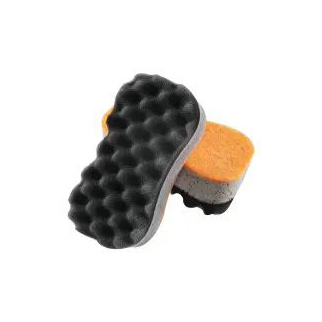
Open-cell polyurethane foam sponges are the most widely available type and span an enormous quality range. The key specification is pores per inch (PPI): lower PPI means larger pores and better particle encapsulation. For car washing, look for sponges in the 20–45 PPI range. Sponges above 60 PPI have pores too small to safely capture grit and behave similarly to closed-cell foam against the paint.
A quality open-cell foam sponge in the correct PPI range performs comparably to a natural sea sponge at a fraction of the cost — typically $3–$12 versus $15–$40 for a quality sea sponge. The trade-off is lifespan: foam sponges begin to tear and lose structural integrity after 6–18 months of regular use, while a well-maintained sea sponge can last several years.
Cellulose Sponge
Cellulose sponges — the flat, rectangular sponges commonly found in hardware stores — are not recommended for painted surfaces. Their pore structure is small and largely closed when wet, meaning dirt particles sit on the contact face rather than being absorbed into the sponge body. They also have a relatively hard surface texture when partially dry. Cellulose sponges are, however, excellent for cleaning glass, plastic trim, and rubber seals where scratch sensitivity is lower.
Microfiber Sponge and Hybrid Products
A growing category combines an open-cell foam core with a microfiber outer layer. The microfiber face provides split-fiber construction — each fiber is divided into 16 or more micro-wedges that mechanically lift and encapsulate particles. This design outperforms plain foam in controlled scratch tests, making it the preferred choice for enthusiasts washing dark or single-stage paint. Quality microfiber sponge hybrids typically carry a GSM (grams per square meter) rating: 400–600 GSM is the recommended range for wash applicators. Below 300 GSM, the microfiber pile is too thin to effectively trap particles.
| Type | Paint Safety | Water Retention | Typical Price | Lifespan | Best For |
|---|---|---|---|---|---|
| Natural Sea Sponge | Excellent | Very High | $15–$40 | 2–5 years | All painted surfaces |
| Open-Cell Foam (20–45 PPI) | Good | High | $3–$12 | 6–18 months | Everyday washing |
| Cellulose Sponge | Poor | Medium | $1–$5 | 6–12 months | Glass, trim, tires |
| Microfiber Hybrid (400–600 GSM) | Excellent | Very High | $8–$25 | 1–3 years | Dark paint, show cars |
Shape and Size: How Form Affects Function
Sponge shape is more than an aesthetic choice — it directly affects how much panel area you cover per pass, how much control you have around body lines, and how effectively you rinse out trapped dirt between panels.
Round and Oval Sponges
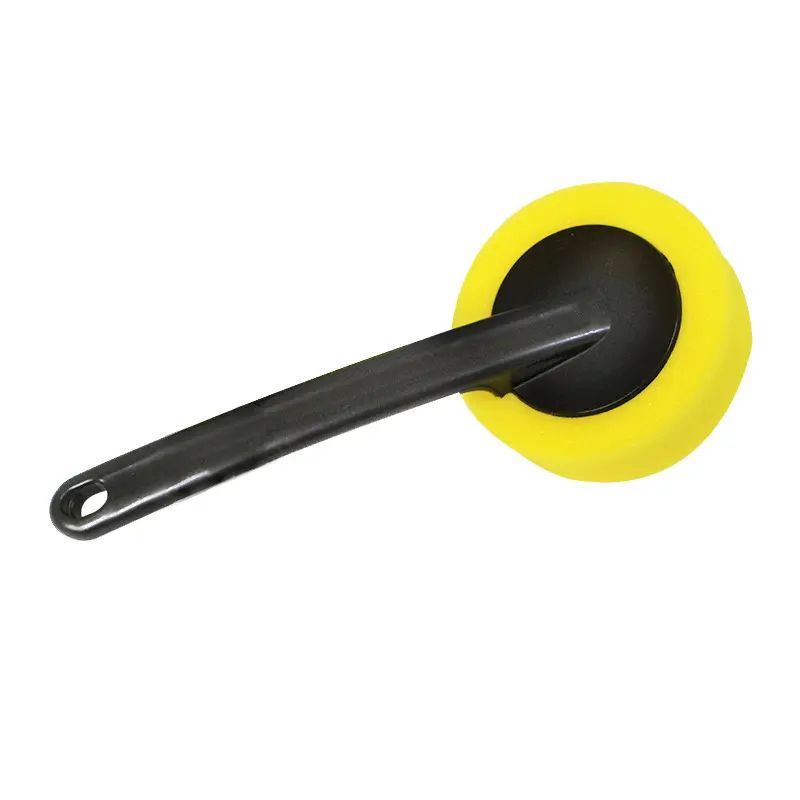
Round sponges with no sharp edges are the safest geometry for paint contact. Without corners, there is no risk of a high-pressure edge digging into the clear coat during a washing stroke. They are easy to hold, rotate naturally in the hand, and present a consistent contact face across flat panels. A diameter of 5–7 inches (13–18 cm) is the practical sweet spot — large enough for efficient coverage on door panels and hoods, small enough for controlled work around mirrors and door handles.
Rectangular and Block Sponges
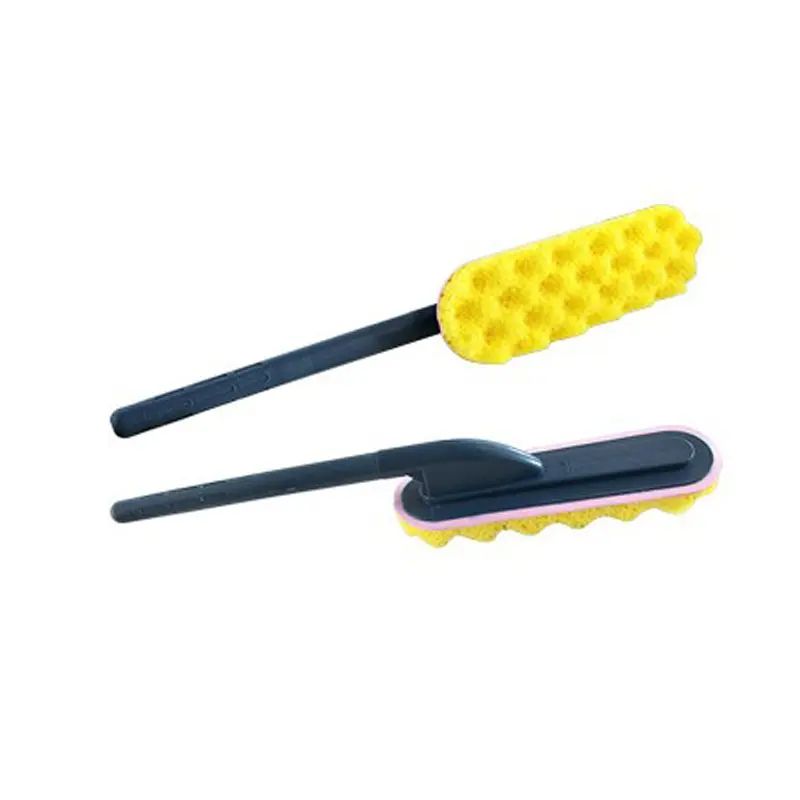
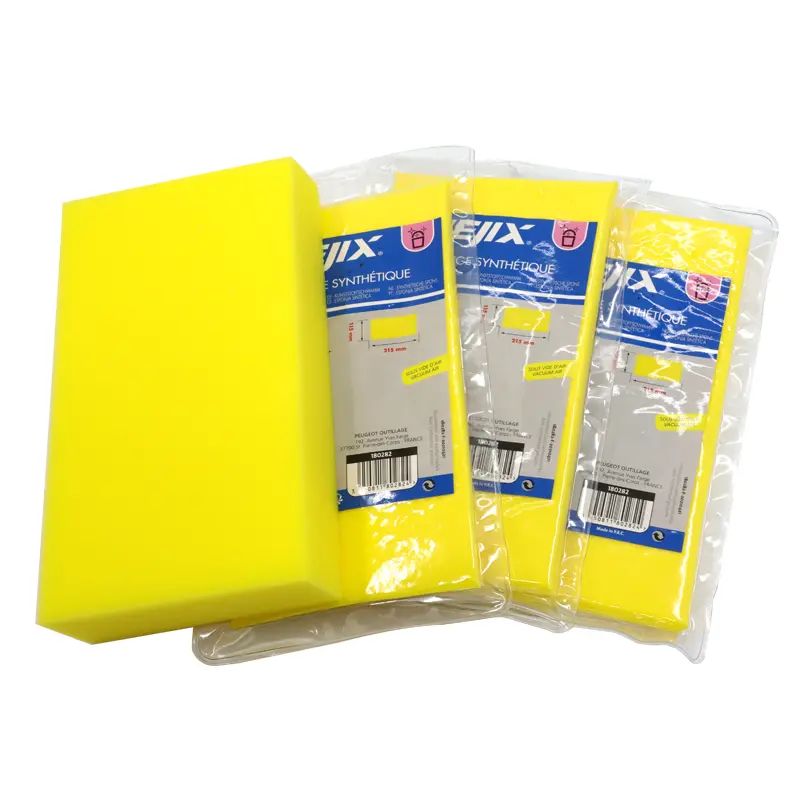
Rectangular block sponges offer more surface area per pass on large flat panels like hoods and roofs, reducing wash time. However, their corners present a higher scratch risk if pressure is applied unevenly. If using a block sponge, round the edges slightly by hand before first use and always maintain even pressure across the full face. Block sponges work best on trucks, SUVs, and vans where large flat surfaces dominate.
Specialty Shapes: Mitt-Style and Finger Sponges
Some manufacturers produce sponges in a mitt or glove format that slides over the hand. These improve grip and reduce arm fatigue during longer washing sessions, but they offer less tactile feedback than a handheld sponge — making it easier to accidentally apply excess pressure. Finger sponges (narrow cylindrical sponges) are purpose-built for wheels, spoke gaps, and grille openings where a standard sponge cannot reach without folding.
Car Wash Sponge vs. Microfiber Wash Mitt: Settling the Debate
The professional detailing community largely shifted from sponges to microfiber wash mitts through the 2010s, and for good reason. A quality microfiber wash mitt outperforms a standard foam sponge on paint safety in controlled scratch testing — but this does not mean sponges are categorically inferior. The comparison depends on product quality on both sides.
A cheap, flat microfiber mitt with 200 GSM pile performs worse than a quality 30-PPI foam sponge. Conversely, a 600 GSM long-pile microfiber mitt with a cuff that prevents knuckle contact with the paint will outperform almost any sponge in scratch minimization. The practical takeaway:
- Daily drivers and light-colored cars: A quality open-cell foam sponge (20–45 PPI) used with the two-bucket method is entirely adequate and more economical
- Dark-colored cars, show vehicles, and new car clear coats: A 500+ GSM microfiber wash mitt or microfiber hybrid sponge is worth the additional investment
- Wheels, tires, and lower body panels: Always use a separate dedicated sponge — never the same one used on painted body panels
How to Use a Car Wash Sponge Without Scratching Your Paint
The two-bucket method is the single most effective technique change any home washer can make, regardless of which sponge they use. It reduces the concentration of abrasive particles re-deposited onto the paint surface by an estimated 85% compared to a single-bucket wash.
The Two-Bucket Method
- Fill Bucket 1 with clean water and car wash shampoo at the manufacturer's recommended ratio (typically 1–2 oz per gallon)
- Fill Bucket 2 with clean water only — this is your rinse bucket
- Place a grit guard insert at the bottom of each bucket; grit guards trap dislodged particles below the wash line so they cannot be re-loaded onto the sponge
- Load the sponge from Bucket 1 and wash one panel at a time using straight, overlapping strokes — never circular motions, which create swirl patterns
- Rinse the sponge thoroughly in Bucket 2 before reloading from Bucket 1 for the next panel
- Rinse each panel with a hose before moving to the next to prevent soap from drying on the surface
Washing Sequence and Pressure
Always wash from the top of the vehicle downward. The roof and upper panels carry the least road contamination; the lower sills and rocker panels carry the most. Washing top-down prevents the heaviest contamination zones from contaminating your sponge before you've reached cleaner areas. Apply light, even pressure — the weight of the sponge itself is almost always sufficient. Pressing harder does not clean more effectively; it only increases the risk of dragging trapped particles across the clear coat.
Pre-Rinse: The Step Most People Skip
Before touching the car with a sponge, rinse the entire vehicle with a hose or pressure washer set to 800–1,200 PSI maximum (holding the nozzle at least 12 inches from the surface). This removes the majority of loose surface contamination — road film, dust, bird deposits — before any contact washing begins. Skipping this step means your sponge encounters the full particle load from the start, dramatically increasing scratch risk regardless of sponge quality.
Matching Sponge to Paint Type and Condition
Not all paint finishes have the same scratch sensitivity. Understanding your paint type allows you to calibrate how much caution — and how much product cost — is actually warranted.
| Paint Type / Condition | Scratch Sensitivity | Recommended Sponge | Notes |
|---|---|---|---|
| Modern clear coat (white/silver) | Low–Medium | Open-cell foam (30–45 PPI) | Light colors hide minor swirls; foam is cost-effective |
| Modern clear coat (black/dark) | High | Microfiber hybrid or natural sea sponge | Swirls are highly visible; justify premium sponge |
| Single-stage paint (older vehicles) | Very High | Natural sea sponge or 500+ GSM microfiber | No clear coat buffer; damage goes directly into color layer |
| Ceramic-coated paint | Low (coating) | pH-neutral shampoo + any quality sponge | Avoid sponges with embedded wax — they clog ceramic pores |
| Matte / satin finish | Very High | Microfiber hybrid only; light pressure | Polishing out scratches is not possible without changing sheen |
Sponge Maintenance: How to Keep It Safe Wash After Wash
A sponge that is not properly maintained becomes progressively more dangerous to your paint with each use. Residual dirt, hardened soap deposits, and microbial growth all degrade pore structure and increase the abrasive particle load the sponge carries into each subsequent wash.
After Each Wash
- Rinse the sponge thoroughly under running water until the water runs completely clear — residual soap promotes mildew growth
- Gently squeeze (do not wring or twist) to expel water — wringing tears the pore walls of foam sponges and weakens sea sponge fibers
- Store in a dry, ventilated location — never in a sealed bag or bucket where moisture and bacteria accumulate
Monthly Deep Clean
Soak the sponge for 15–20 minutes in a solution of warm water and a small amount of dedicated car wash shampoo or gentle dish soap. This dissolves accumulated wax, polish, and road film deposits from within the pore structure. Rinse and air-dry completely before storage. For microfiber hybrid sponges, machine wash at 30°C maximum without fabric softener — fabric softener coats the microfiber split ends and destroys their particle-lifting capability.
When to Replace Your Sponge
Replace your car wash sponge immediately if you observe any of the following:
- Tearing, pitting, or structural breakdown of the foam body
- Persistent odor after thorough rinsing — indicates bacterial colonization deep within the pore structure
- Discoloration that does not rinse out, particularly dark grey or black staining from embedded grit
- Any sponge that has been dropped on the ground during a wash — even once — should be rinsed in the grit bucket only and retired from paint contact duty
Sponges that are no longer safe for painted surfaces can be repurposed for wheel cleaning, engine bay wipe-downs, or interior detailing — areas where scratch sensitivity is significantly lower.
What to Look for on the Label: Buying Checklist
Most car wash sponge packaging is vague or misleading. Here is what to actually look for — and what to avoid — when evaluating a product in store or online.
Look For
- Stated PPI range (for foam): 20–45 PPI is the safe zone for painted surfaces
- GSM rating (for microfiber): 400 GSM minimum; 500–600 GSM preferred
- "Open cell" or "large pore" descriptor on foam products
- Species identification on natural sea sponges: look for Wool sponge (Hippospongia lachne) specifically
- Separate use designations: reputable brands specify which sponge is for paint and which is for wheels/tires
Avoid
- Products labeled only as "car wash sponge" with no material specification
- Sponges with embedded abrasive pads or scrubbing strips — these should never contact painted surfaces
- Very flat, dense foam with a uniform fine-pore appearance — this is typically high-PPI or closed-cell foam
- Multi-packs priced below $1 per unit — at that price point, material quality is essentially uncontrolled
- Sponges marketed with wax or conditioner pre-loaded into the foam — these are incompatible with ceramic coatings and reduce the sponge's ability to encapsulate dirt particles