
 English
  日本語
日本語  Français
  русский
  Português
  Español
  عربى
عربى 
In the professional cleaning industry and high-end household maintenance, the choice of tools directly impacts the quality of the finish. For years, the market was dominated by cellulose and foam products, but the emergence of the microfiber sponge has fundamentally changed the standard for “clean.” If you have ever struggled with annoying water marks on a mirror or cloudy residues on a stainless steel fridge, you have experienced the limitations of traditional materials.
The Microscopic Difference: Fiber Structure and Surface Area
The secret to the superior performance of microfiber sponges lies in their microscopic architecture. To the naked eye, all sponges might look similar, but under a microscope, the difference between a traditional cellulose fiber and a synthetic microfiber is staggering. Traditional sponges are made of wood pulp or large-cell polyurethane, featuring thick, rounded fibers that are relatively smooth.
The Power of “Split” Fibers
True high-quality microfiber is a blend of polyester and polyamide (nylon) that has been “split” during the manufacturing process. This splitting creates a star-shaped cross-section with millions of tiny channels.
- H4: Mechanical vs. Chemical Cleaning: While traditional sponges rely on chemicals to break down dirt and the sponge’s pores to “carry” it, microfiber uses mechanical action. The wedge-shaped filaments physically scrape away grease and microscopic particles from the surface.
- H4: Increased Surface Area: Because the fibers are so small (1/100th the thickness of a human hair), the total surface area of a single microfiber cleaning sponge is exponentially larger than that of a traditional one. This massive surface area allows the sponge to trap and hold a significantly higher volume of dust and debris, preventing it from being smeared back onto the surface—the leading cause of streaks.
Superior Absorbency and Controlled Moisture Release
Achieving a streak-free finish on glass or polished stone is largely a matter of moisture management. Traditional cellulose sponges are highly absorbent, but they are also “leaky.” They tend to dump large amounts of water and cleaning solution onto the surface, which leads to slow evaporation and the formation of mineral deposits or “water spots.”
Capillary Action in Microfiber Sponges
The polyamide in microfiber sponges is naturally hydro-philic (water-loving). When combined with the star-shaped fiber structure, it creates a powerful capillary effect.
- H4: Moisture Retention: Instead of allowing water to sit in large puddles, microfiber pulls the liquid deep into its internal channels. When you wipe a surface, the sponge leaves behind only a microscopic, uniform film of moisture.
- H4: Rapid Evaporation: This thin film evaporates almost instantly and evenly. Because the moisture is distributed so finely, it doesn’t leave behind the concentrated mineral lines that we recognize as “streaks.” This is why professional microfiber sponges are the preferred tool for high-gloss surfaces and automotive detailing; they manage the water-to-surface ratio with precision that natural fibers simply cannot match.
Lint-Free and Scratch-Free Performance on Delicate Surfaces
One of the most frustrating experiences in cleaning is finishing a job only to find the surface covered in tiny white flecks of lint. This is a common failure of cotton cloths and cellulose sponges, as their organic fibers break down and shed during the friction of wiping.
Continuous Filament Durability
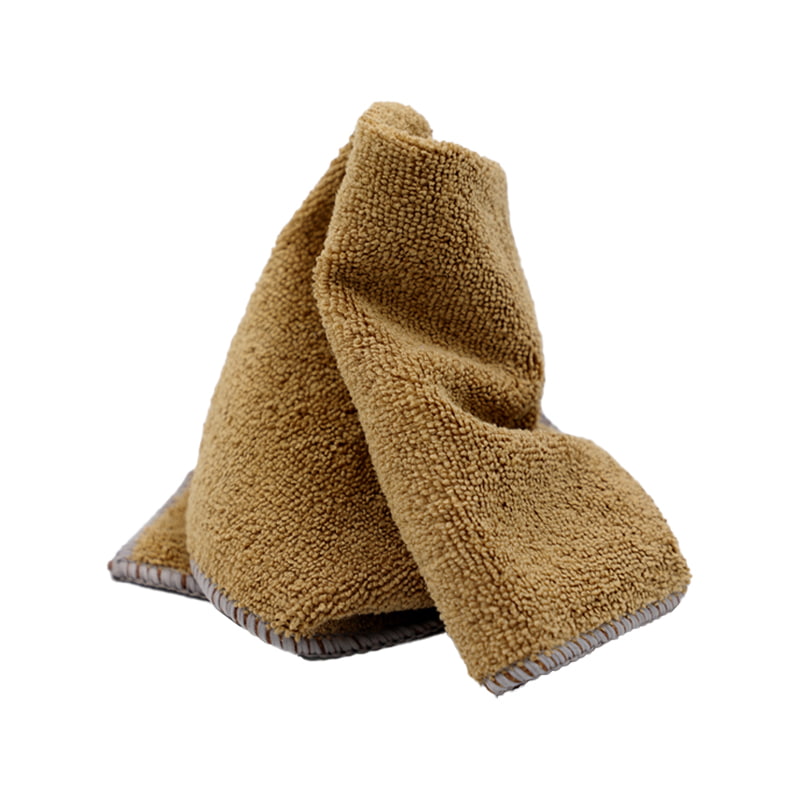
Microfiber is made from continuous synthetic filaments that are incredibly resilient. Because these fibers are engineered for durability, they do not “shed” even after hundreds of uses.
- H4: Protecting Sensitive Coatings: Modern surfaces like electronic screens, stainless steel, and automotive clear coats require a “non-scratch” approach. A traditional sponge can trap a piece of grit against its flat surface and drag it across the finish, creating “swirl marks.”
- H4: Debris Encapsulation: A microfiber sponge works differently. Its deep, fibrous pile allows grit and sand to be pulled inside the fabric, away from the surface being cleaned. This “encapsulation” protects delicate coatings and ensures that even after a heavy cleaning session, the surface remains as smooth as it was on day one. For businesses looking for bulk microfiber sponges, this durability translates to a significantly lower replacement cost compared to disposable or low-grade alternatives.
Technical Comparison Table: Microfiber vs. Traditional Sponges
| Feature | Microfiber Cleaning Sponges | Traditional Cellulose/Foam |
|---|---|---|
| Material Composition | Polyester/Polyamide Blend | Wood Pulp / Polyurethane |
| Cleaning Logic | Mechanical (Lifts & Traps) | Pushes & Smears |
| Streak Resistance | High (Controlled Evaporation) | Low (Water Spotting) |
| Absorbency Rate | 7-8x Weight in Water | 3-5x Weight in Water |
| Linting Level | Zero (Continuous Filament) | High (Sheds fibers over time) |
| Eco-Friendliness | Reusable (100+ Washes) | Disposable (Degrades quickly) |
| Chemical Usage | Minimal (Works with water) | High (Requires surfactants) |
FAQ: Frequently Asked Questions
Q1: Can microfiber sponges really clean without using chemicals?
Yes. Due to the star-shaped fibers, microfiber can remove up to 99% of bacteria and oils using only water. This makes it an ideal eco-friendly cleaning tool for households sensitive to harsh chemicals.
Q2: Why did my microfiber sponge start leaving streaks after a few weeks?
This is usually caused by clogged fibers. If you use fabric softeners or oily cleaning agents, the microscopic channels become “filled” and lose their capillary action. Always wash your sponges in clear water or with a residue-free detergent.
Q3: Is it safe to use microfiber sponges on my car’s paint?
Absolutely. In fact, it is the safest option. The fibers pull dirt away from the paint rather than rubbing it in. Just ensure the sponge is clean before you begin to avoid scratching with old debris.
Q4: How often should I replace a professional microfiber sponge?
In a commercial setting, a high-quality sponge can last for 100 to 200 wash cycles. You will know it’s time to replace it when the fibers appear “matted” or if it no longer absorbs water as quickly as it once did.
References & Authority Citations
- The International Sanitary Supply Association (ISSA): The Science of Microfiber and its Impact on Environmental Cleaning.
- Journal of Applied Microbiology: Comparative Efficacy of Microfiber vs. Traditional Materials in Reducing Surface Bioburden.
- ASTM International: D6664 Standard Specification for Synthetic Fiber Performance.
- EPA Guidelines: Using Microfiber to Improve Cleaning and Reduce Chemical Exposure.