
 English
  日本語
日本語  Français
  русский
  Português
  Español
  عربى
عربى 
Understanding the Material Science: Cellulose vs. Polyurethane
To understand hygiene, we must first look at what these tools are actually made of. The difference in cellular structure dictates how they interact with water and germs.
What is a Compressed Cellulose Sponge?
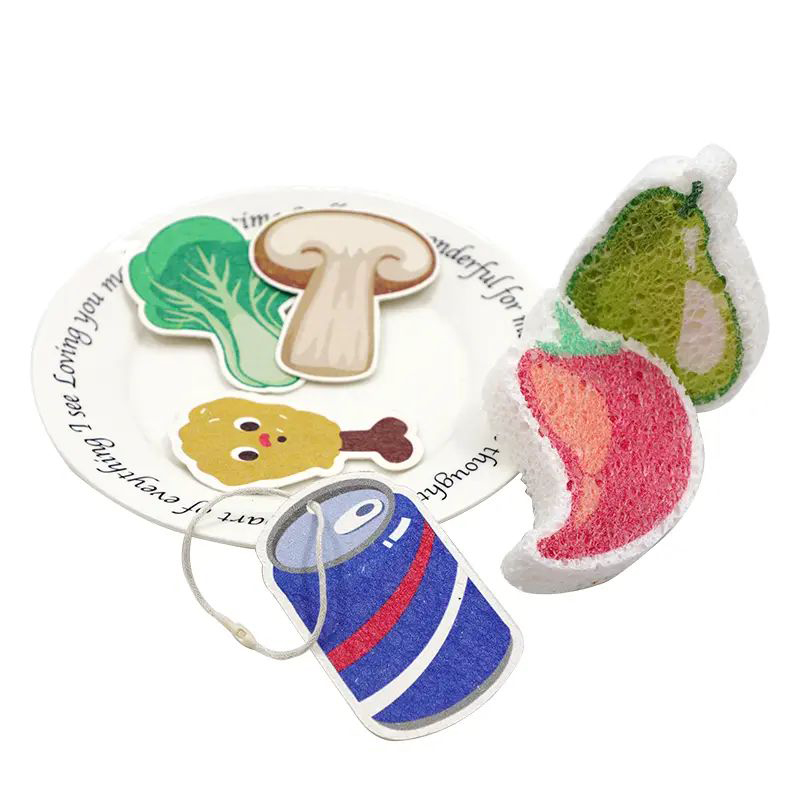
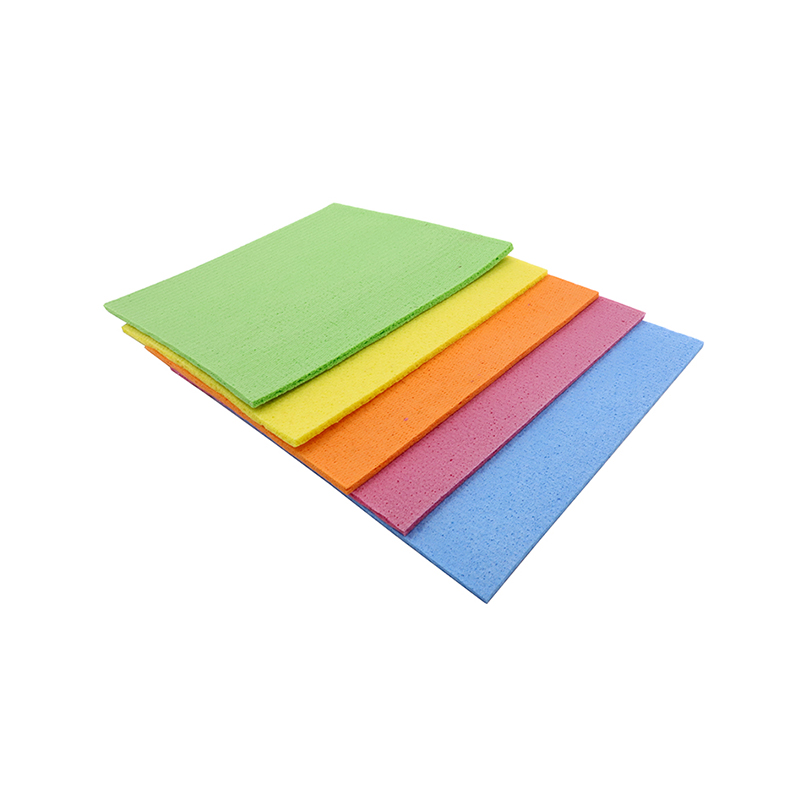
A compressed cellulose sponge is derived from natural wood pulp and cotton fibers. In its “compressed” state, it is paper-thin, saving immense storage space and reducing shipping carbon footprints. When dipped in water, it instantly expands into a soft, highly porous structure. Because it is a natural fiber, it is inherently hydrophilic (water-loving), allowing it to rinse out food particles more efficiently than synthetic alternatives.
The Anatomy of a Polyurethane Sponge
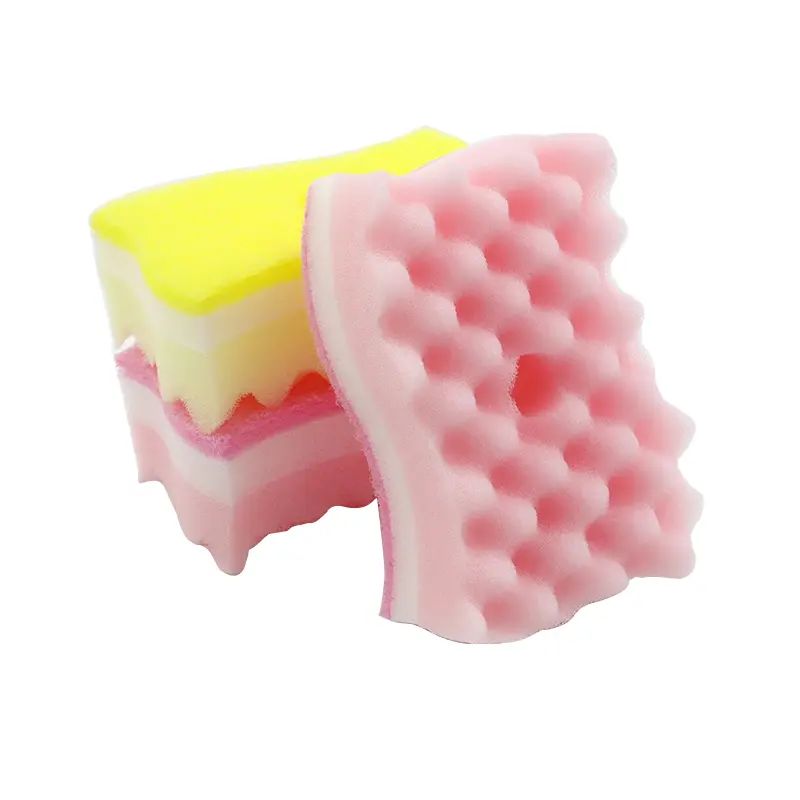
Polyurethane sponges are petroleum-based plastics. They are often characterized by a “closed-cell” or “semi-open cell” structure. While they are durable and cheap to produce, plastic fibers are hydrophobic. This means that while the holes in the sponge hold water, the fibers themselves repel it, often trapping grease and microscopic food debris deep within the plastic matrix where they are difficult to wash out.
The Hygiene Showdown: Drying Time and Bacteria Growth
The “hygiene” of a sponge is almost entirely dependent on its desiccation rate—or how fast it dries. Bacteria, such as Salmonella and E. coli, thrive in damp, dark environments.
Breathability and Air-Drying
Compressed cellulose sponges have a unique advantage: they become stiff and hard when dry. This “hardening” process is a natural defense mechanism. By losing moisture rapidly, the cellulose creates an inhospitable environment for bacteria to multiply. In contrast, polyurethane sponges tend to stay “squishy” and damp for hours, or even days, providing a perfect breeding ground for biofilm and “sour” odors.
Rinsing Efficiency
Because cellulose is a natural fiber, it releases soap and food particles much more easily during a simple hand-rinse. Plastic sponges, particularly those with a “scrubby” side glued to the top, often trap organic matter at the glue line. This trapped organic matter becomes a food source for bacteria, leading to that distinct “old sponge” smell that indicates high microbial activity.
Performance and Sustainability Comparison
When choosing a kitchen tool for a professional or high-traffic home kitchen, longevity and environmental impact are key factors. Below is a comparison of how these two materials stack up.
| Feature | Compressed Cellulose Sponge | Polyurethane (Plastic) Sponge |
|---|---|---|
| Material Source | 100% Plant-based (Wood Pulp) | Petroleum / Synthetic Plastics |
| Absorption | High (Up to 20x its weight) | Moderate to Low |
| Drying Speed | Fast (Hardens when dry) | Slow (Retains moisture) |
| Bacteria Resistance | Higher (Due to fast drying) | Lower (Prone to biofilm) |
| Biodegradability | 100% Compostable | Non-biodegradable (Microplastics) |
| Durability | High (Resists tearing) | Moderate (Crumbles over time) |
Maintenance: How to Keep Your Cellulose Sponge Sanitary
Even the best sponge requires proper care to remain hygienic. Because a compressed cellulose sponge is heat-resistant (unlike some plastics that may melt or off-gas), you have more options for sanitization.
The Microwave Method
Research suggests that microwaving a wet cellulose sponge for 60 to 90 seconds can kill over 99% of bacteria. Ensure the sponge is soaking wet to avoid scorching the fibers. This is a quick daily habit that can extend the hygienic life of your sponge significantly.
Dishwasher and Boiling Water
You can safely toss your cellulose sponge into the top rack of the dishwasher during a high-heat cycle. Alternatively, because it is made of rugged plant fibers, you can drop it into a pot of boiling water for five minutes. This deep-cleans the internal pores that manual rinsing might miss.
FAQ: Common Questions About Sponge Hygiene
Q1: How often should I replace my compressed cellulose sponge?
Even with regular cleaning, we recommend replacing kitchen sponges every 2–4 weeks depending on usage. Because cellulose is compostable, you can dispose of it in your organic waste bin without guilt.
Q2: Why does my sponge smell bad so quickly?
That smell is caused by the metabolic byproducts of bacteria. If your sponge smells, it means it is staying wet for too long or trapping food particles. Switching to a fast-drying cellulose sponge and rinsing it thoroughly after use usually solves this.
Q3: Is it safe to use cellulose sponges on delicate surfaces?
Yes. Natural cellulose is non-abrasive. It is safe for non-stick pans, glassware, and expensive countertops, whereas some synthetic “heavy-duty” sponges can leave micro-scratches.
References and Further Reading
- Journal of Environmental Health: Microbial Contamination of Kitchen Sponges.
- Environmental Science & Technology: The Impact of Synthetic Microfibers on Marine Ecosystems.
- World Health Organization (WHO): Home Hygiene and Food Safety Standards.